Virtual Reality in Chemical, Oil & Gas: Immersive Safety Training

VR revolutionizes chemical and energy operations through immersive safety training, risk-free simulations, and enhanced operational preparedness.

Train personnel in hazardous scenarios without real-world risks. From emergency response drills to complex process operations, VR provides safe, controlled environments for comprehensive training across chemical plants, refineries, and offshore platforms.

Experience the future of chemical and energy training with cutting-edge Virtual Reality technology. Our VR solutions create photorealistic simulations of chemical plants, refineries, and offshore platforms, enabling comprehensive training without safety risks or operational disruptions.
  • Risk-Free Training
  • Immersive Simulations
  • Enhanced Safety
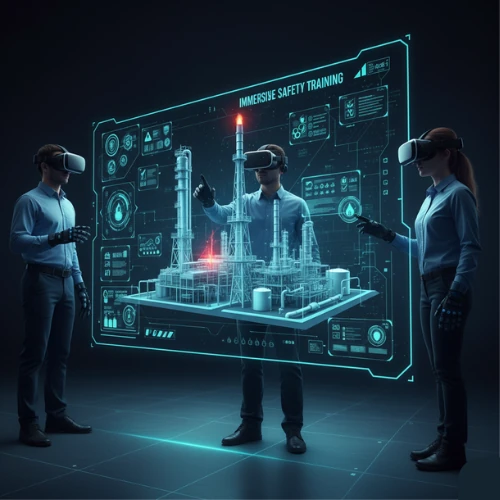
Virtual Reality technology providing immersive safety training in chemical oil gas operations with realistic simulations

Virtual Reality Applications in Chemical, Oil & Gas Industry

Revolutionize training and operations with immersive VR solutions designed for chemical and energy environments.

Explore how leading chemical companies, refineries, and energy producers are using Virtual Reality to achieve unprecedented improvements in safety training, operational preparedness, and risk management.

Safety Training & Emergency Response

Immersive safety training in virtual hazardous environments without real-world risks.

  • Emergency evacuation drills
  • Hazardous material handling
  • Fire safety procedures
  • Chemical spill response

Process Operations Training

Comprehensive training on complex chemical processes and equipment operations.

  • Process startup/shutdown procedures
  • Equipment operation training
  • Quality control processes
  • Troubleshooting scenarios

Maintenance & Inspection Training

Virtual maintenance procedures and inspection protocols for critical equipment.

  • Maintenance procedure practice
  • Equipment inspection training
  • Predictive maintenance techniques
  • Safety lockout procedures

Process Simulation & Optimization

Virtual process environments for testing and optimization without production impact.

  • Process parameter testing
  • Optimization scenarios
  • What-if analysis
  • Performance benchmarking

Team Coordination & Communication

Multi-user VR environments for team training and coordination exercises.

  • Team emergency response
  • Communication protocols
  • Leadership training
  • Cross-functional coordination

Compliance & Regulatory Training

Ensure regulatory compliance through standardized VR training programs.

  • Regulatory procedure training
  • Compliance verification
  • Audit preparation
  • Documentation training

Why Choose Virtual Reality for Chemical Training?

Virtual Reality technology delivers transformative benefits for chemical, oil, and gas training:

  • Zero Risk Training: Practice dangerous scenarios without exposure to real hazards
  • Unlimited Repetition: Repeat training scenarios as many times as needed for mastery
  • Consistent Standards: Ensure standardized training across all facilities and personnel
  • Measurable Results: Track performance metrics and learning progress in real-time
  • Cost Efficiency: Reduce training costs while improving effectiveness and safety
  • Regulatory Compliance: Meet and exceed industry safety and training requirements

VR Training Benefits for Chemical Operations

Measurable advantages of Virtual Reality training in chemical, oil, and gas environments

Risk-Free Training

Practice dangerous scenarios safely without exposure to real hazards

Improved Retention

Immersive experiences lead to better knowledge retention and skill development

Reduced Training Time

Accelerated learning through focused, repeatable VR training modules

Cost Effective

Eliminate travel costs and reduce equipment downtime for training

VR Training Impact Metrics

65%
Safety Improvement
60%
Training Time Reduction
85%
Engagement Increase
70%
Cost Savings

Advanced VR Features for Chemical Industry

Cutting-edge Virtual Reality capabilities designed for chemical and energy training

Immersive Environments

Photorealistic virtual chemical plants and offshore platforms

Interactive Controls

Realistic equipment interaction using VR controllers and haptic feedback

Multi-User Support

Collaborative training sessions with multiple participants

Performance Analytics

Detailed training metrics and performance assessment tools

VR Technology Specifications

VR Hardware

  • Meta Quest Pro/3
  • HTC Vive Pro 2
  • Varjo Aero
  • Pico 4 Enterprise

Training Modules

  • Safety procedures
  • Emergency response
  • Equipment operation
  • Process simulation

Performance Tracking

  • Learning analytics
  • Competency assessment
  • Progress tracking
  • Certification management

VR Success Stories in Chemical, Oil & Gas

Real-world implementations demonstrating transformative results in safety and training

VR Safety Training Program

Industry Context:Major chemical manufacturing complex implementing comprehensive safety training

Training Challenge:Traditional safety training lacked realism and engagement, leading to poor retention and safety incidents.

VR Solution:Immersive VR safety training platform with realistic hazardous scenarios and emergency response simulations.

Measurable Results:Safety incident rate reduced by 65%, training engagement improved by 85%, and compliance scores increased by 50%.

Process Operations Training

Industry Context:Oil refinery modernizing operator training programs for complex process operations

Training Challenge:New operators required extensive on-site training, creating safety risks and production disruptions.

VR Solution:VR process simulation environment allowing operators to practice startup, shutdown, and emergency procedures.

Measurable Results:Training time reduced by 60%, operator competency improved by 45%, and production disruptions decreased by 40%.

Maintenance Training Enhancement

Industry Context:Offshore oil platform implementing advanced maintenance training protocols

Training Challenge:Maintenance training on critical equipment posed safety risks and required expensive equipment downtime.

VR Solution:VR maintenance training system with realistic equipment models and step-by-step procedure guidance.

Measurable Results:Maintenance efficiency improved by 50%, training costs reduced by 70%, and equipment availability increased by 30%.

VR Training Transformation Metrics

Safety Improvements

  • 65% reduction in safety incidents
  • 85% improvement in hazard recognition
  • 50% faster emergency response times
  • 90% compliance rate achievement

Training Efficiency

  • 60% reduction in training time
  • 70% decrease in training costs
  • 45% improvement in skill retention
  • 80% increase in training engagement

Revolutionize Chemical Safety Training with Virtual Reality

Transform your safety training programs with immersive VR technology that delivers measurable improvements in safety, efficiency, and compliance. Experience risk-free training that prepares your team for real-world challenges without real-world dangers.

  • Free VR training assessment
  • Custom training module development
  • Pilot program implementation
  • Comprehensive instructor training
  • Performance analytics platform
  • Ongoing content updates

Frequently Asked Questions

Our VR training solutions work with enterprise-grade headsets including Meta Quest Pro/3, HTC Vive Pro 2, and Varjo Aero. We provide complete hardware packages and setup support for seamless implementation.

Our VR simulations feature photorealistic environments based on actual chemical plants and refineries. They include accurate equipment models, realistic physics, and authentic operational procedures for maximum training effectiveness.

VR training complements and enhances traditional methods by providing risk-free practice of dangerous scenarios. It's particularly effective for emergency response, hazardous material handling, and complex procedure training that would be unsafe or impractical in real environments.

Our VR platform includes comprehensive analytics tracking performance metrics, completion rates, skill assessments, and learning progress. We provide detailed reports showing training effectiveness, competency levels, and areas for improvement.

Typical implementation takes 8-12 weeks including content development, system setup, and instructor training. We offer pilot programs that can be deployed in 4-6 weeks to demonstrate value before full-scale implementation.